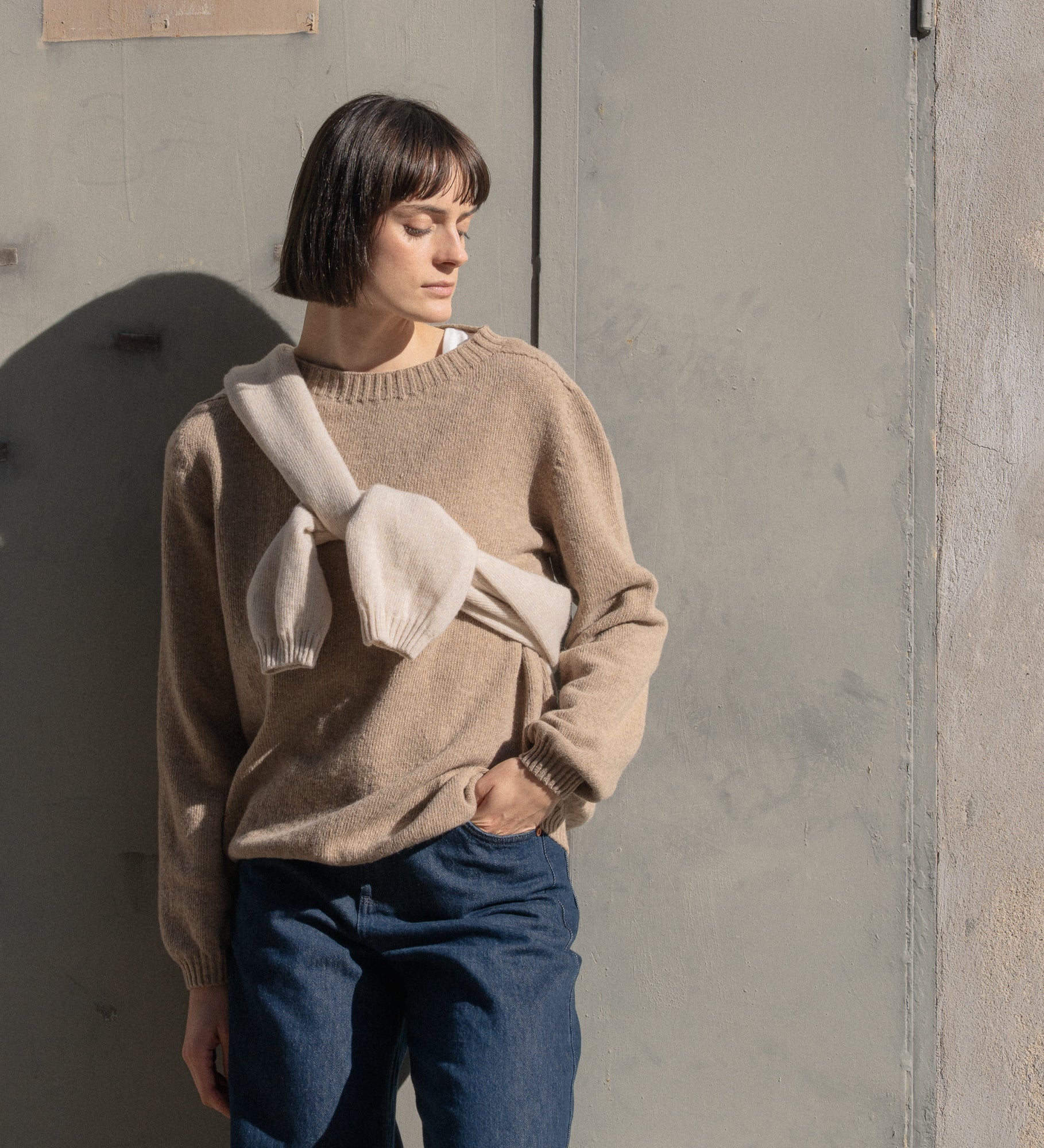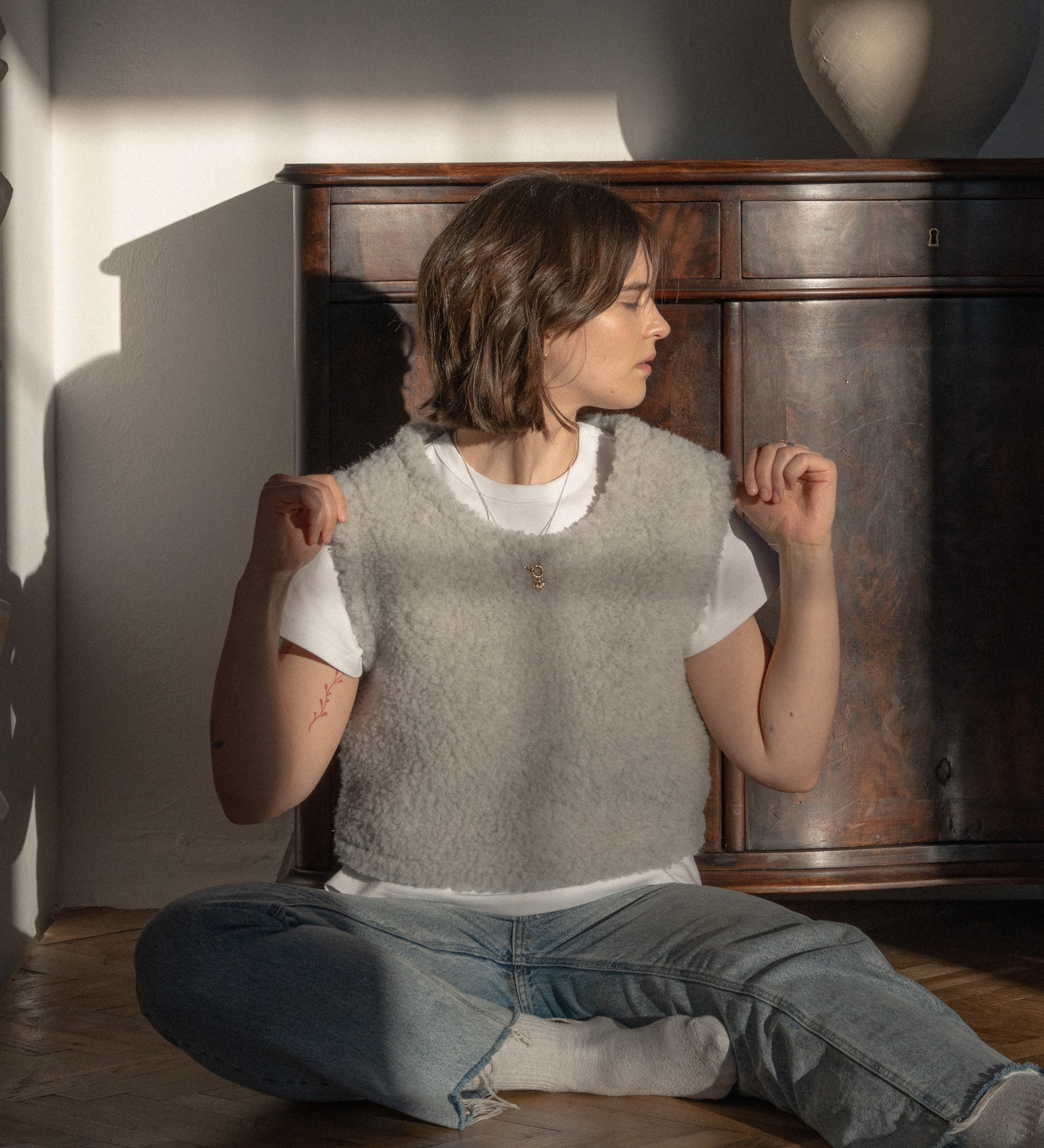
What happens to polyester over time – and what happens to wool?
We rarely think about clothes in these terms. We buy them for a season or two, sometimes longer. But materials live on far longer than we imagine — and each one ages differently.
Polyester is a plastic.
Made from crude oil. It doesn't break down naturally. It doesn't return to the earth. Over time it may pill, thin and lose its shape — but it doesn't disappear. Even when we stop wearing it, it's still there. In a wardrobe, in landfill, in the environment. During use and washing it releases microplastics — tiny particles that enter waterways and remain there for a very long time. It's a material that stays.
Wool behaves differently.
It's a natural fibre. It changes over time — it may compress slightly, soften, shift a little in appearance. But it keeps working. It keeps you warm. It keeps breathing. It doesn't shed plastic particles. It leaves no lasting trace in the environment. When you're done with it, it can return to nature. Break down. Disappear.
In day-to-day use, the difference is often felt before it's seen. Polyester can feel comfortable at first. But it doesn't breathe the same way. It holds moisture against skin. It picks up smells faster.
Wool works with the body. It regulates temperature. It handles moisture well. It doesn't need frequent washing. Over time it moulds to how you use it.
This isn't a choice between "good" and "bad".
It's more of a decision — about which material you want around you every day. And what it leaves behind.
Wool isn't perfect. It changes, it ages, it has its characteristics. But it's part of a natural cycle.
Polyester is durable in a different way. The kind that doesn't disappear, doesn't return to nature — it just stays there, even though it was never part of it.